






Restaurant kitchens create a cleaning problem that ordinary mops rarely solve well. Grease film, food debris, wet traffic lanes and tight routes around equipment all make it harder to leave the floor clean and dry before the next shift. A floor scrubber for restaurant kitchens can combine scrubbing, dirty-water recovery and drying in one pass—but only if the machine fits the layout and the cleaning routine.
This guide explains what restaurant operators, contract cleaners and equipment distributors should check before selecting a compact commercial floor scrubber.
Start with the kitchen layout—not the machine size
The best starting point is the narrowest usable route, not the total floor area. Measure the clearance between cooking lines, preparation tables, storage racks and doorways. Also note floor drains, ramps, thresholds and any zone that must stay open during cleaning.
A floor scrubber for restaurant kitchens should fit both the cleaning area and the path used to reach it. A machine that looks efficient on paper can become impractical if it cannot turn around an island or pass safely through a service door. For many restaurant kitchens, a compact walk-behind scrubber is easier to move and store than a large ride-on model.
What makes restaurant kitchen floors different?
Restaurant floors often have a mix of grease, water, food residue and foot traffic. The goal is not only to make the surface look clean; it is to remove soil while leaving as little standing water as possible. That helps the cleaning team reopen the area sooner and reduces slip risk during the changeover between shifts.
- Grease film: needs the right cleaning chemical and enough mechanical agitation.
- Grout lines and textured tile: can hold soil that a flat mop leaves behind.
- Tight operating windows: usually require fast cleaning after service or before opening.
- Drains and edges: require a plan for detail work; a scrubber does not replace corner cleaning or drain maintenance.
Which Floor Scrubber for Restaurant Kitchens Is Right for You?
Compact walk-behind floor scrubber
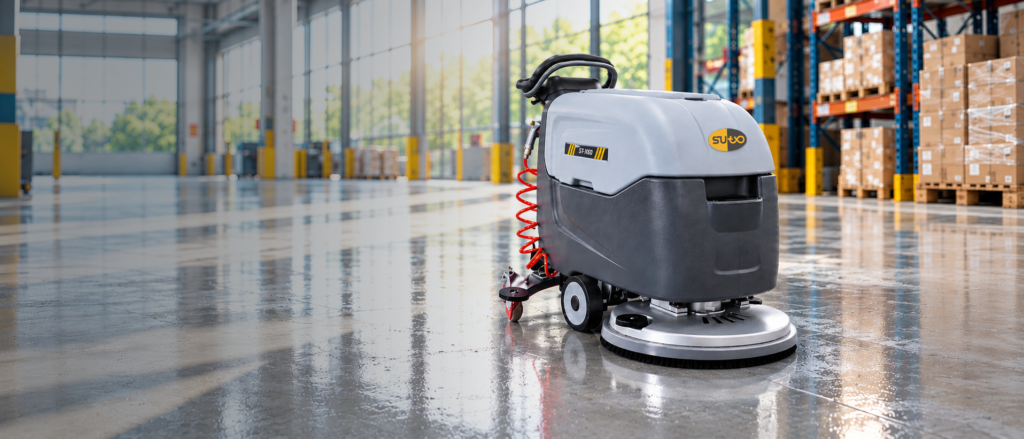
This is normally the most practical format for a restaurant kitchen, café back-of-house area or food-service corridor. It gives the operator control around narrow paths, can be stored in a smaller utility room and is suitable for routine cleaning of tile, sealed concrete and similar hard floors.
Self-propelled walk-behind floor scrubber
Where cleaning teams cover several zones in one shift, self-propulsion can reduce pushing effort and help maintain a steadier cleaning pace. It is a useful option for larger restaurants, hotel kitchens and commissary areas—provided the turning space is still adequate.
Ride-on floor scrubber
A ride-on machine is usually better reserved for broad, open food-production floors, central kitchens or large dining and service areas. In a compact kitchen, its footprint and turning radius can outweigh the productivity benefit.
Five buying checks before you compare models
1. Cleaning path and turning space
Match the scrubber’s working width to the open lanes, not just the square footage. A slightly narrower machine that reaches every daily-cleaning zone may deliver more usable productivity than a wider unit that leaves too much edge work behind.
2. Water recovery performance
When evaluating a floor scrubber for restaurant kitchens, inspect the squeegee and recovery system as carefully as the brush deck. Ask for a demonstration on the same type of tile or textured flooring used in the facility. The floor should be left visibly drier after the pass, especially near doors, drains and traffic lanes.
3. Brush and pad selection
Brush type should match the floor finish and soil load. A more aggressive brush may help with textured surfaces, while a softer option can be more appropriate for sensitive finishes. Always follow the chemical supplier’s dilution and dwell-time guidance; excessive chemical or abrasive tools can damage some floors.
4. Tank access and daily cleaning
Food-service environments demand consistent hygiene. Check whether operators can easily empty, rinse and inspect the recovery tank, filters, squeegee blades and brushes. A machine that is difficult to clean after use is more likely to develop odor, weak recovery or avoidable downtime.
5. Charging and storage
Plan a dry, ventilated storage point with a safe charging routine. The team should be able to park the machine, rinse it and charge it without blocking emergency routes or food-handling areas. Confirm local electrical and workplace-safety requirements before final installation.
A practical workflow for kitchen floor cleaning
- Remove loose debris and pick up larger food waste before using the scrubber.
- Choose a cleaning chemical approved for the floor type and soil condition.
- Start from the farthest point and work toward the exit, keeping the recovery path consistent.
- Detail-clean corners, under fixed equipment and drains separately where the scrubber cannot reach.
- Empty and rinse the recovery system after the job; inspect the squeegee and brush before storage.
For broader operating steps, see our guide to using a commercial floor scrubber. OSHA also recommends keeping restaurant walkways clear and addressing spills promptly; see its restaurant clean-up safety guidance.
For heavy grease, do not assume one pass will solve every problem. A controlled pre-treatment process, correct chemical dwell time and periodic deep cleaning may still be necessary.
Where a compact SUTO floor scrubber can fit
For operators looking for a compact commercial format, the SUTO X60 self-propelled floor scrubber is designed for routine hard-floor cleaning in commercial environments. Its final suitability depends on the kitchen’s aisle width, floor material, daily cleaning schedule and local cleaning procedure. A practical next step is to share a simple floor plan, photos of the floor and the approximate cleaning area so the machine size and brush setup can be reviewed before ordering.
FAQ
Can a floor scrubber clean greasy restaurant kitchen tile?
It can help remove routine soil and grease when the brush, chemical and procedure are appropriate. Very heavy buildup may require pre-treatment and separate detail cleaning.
Is a walk-behind scrubber better than a ride-on model for a restaurant?
For most restaurant kitchens, a compact walk-behind model is easier to maneuver. Ride-on scrubbers are more suitable for larger, open areas.
Will a floor scrubber replace mopping completely?
It can reduce routine mopping on accessible open floor areas, but corners, narrow gaps, drains and equipment edges still need manual attention.
How do I choose the correct floor scrubber size?
Measure the narrowest route, turning zones, doorways and the main cleaning area. Then compare those measurements with the machine’s working width and handling dimensions.
Need help sizing a restaurant floor scrubber?
Send SUTO your kitchen layout, floor type, cleaning area and the widest/narrowest access points. Our team can help you shortlist a practical scrubber configuration for your daily cleaning routine.