






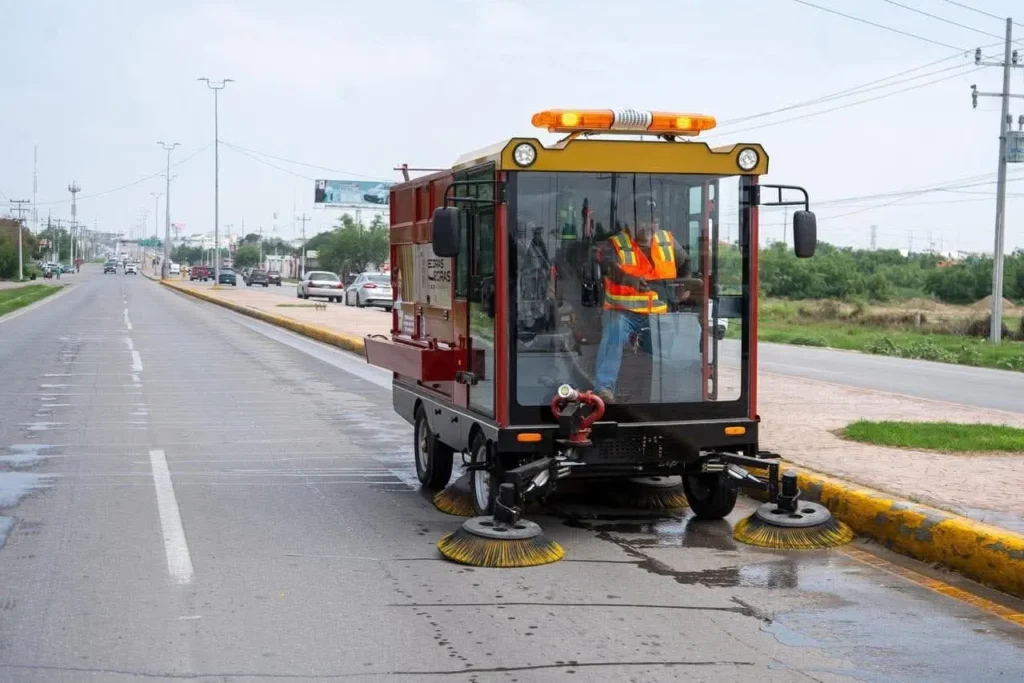
Meta title: Floor Sweeper Buying Guide 2026: How to Choose the Right Machine Meta description: Not sure which floor sweeper fits your warehouse, garage or parking lot? This 2026 buying guide compares push, walk-behind, ride-on and robotic sweepers by size, power, debris type and budget. URL slug: /blog/floor-sweeper-buying-guide
If you’ve ever stood in an aisle comparing a $200 push sweeper against a $20,000 ride-on unit, you already know this: there is no single “best floor sweeper” — only the right one for your floor, your debris, your building and your budget.
This 2026 buying guide cuts through the noise. By the end, you will know exactly which floor sweeper machine type to shortlist for your site, what specs matter, what price range to expect, and when a sweeper alone is not enough (you may actually need a floor scrubber).
We cover commercial floor sweepers, industrial floor sweepers, battery-powered units, walk-behind models, ride-on machines and the new wave of robotic autonomous sweepers — across warehouses, factories, garages, gyms, parking lots and retail floors.

1. What Is a Floor Sweeper, and Do You Actually Need One?
A floor sweeper is a mechanical cleaning machine that uses one or more rotating brushes to gather dust, dirt, chips, nails, gravel and other dry debris into an on-board hopper. Unlike a vacuum cleaner, it does not suck air through a filter — it brushes debris off the floor and into a tray. And unlike a scrubber, it uses no water.
A typical floor sweeper has three brush systems working together:
- Main roller brush under the deck that sweeps debris into the hopper.
- Side brushes (usually one or two) that pull debris from walls and corners into the roller path.
- Vacuum fan + filter (on most modern units) that captures fine dust kicked up by the brushes.
Modern floorsweepers range from hand-pushed units weighing 8 kg to diesel-powered ride-on vehicles clearing 15,000 m² per hour. If your team currently spends hours pushing brooms and dustpans every shift, a mechanical sweeper typically cuts that labour by 70–90% — and cleans more consistently, because it does not tire out.
You need a floor sweeper if:
- Your floor is concrete, epoxy, tile or sealed hardwood and collects daily dry debris.
- You operate a warehouse, factory, garage, gym, retail aisle or parking lot.
- You have recurring dust problems that a broom just spreads around.
- You need to meet ISO / GMP / food-grade cleanliness standards.
- Your audit or customer requires documented cleaning logs.
You probably do not need one if: your mess is mainly wet (spilled liquids, oil, slurry) — in that case look at a floor scrubber or a combination unit instead (see Section 6).
Broom vs sweeper, the numbers: an experienced person with a broom covers about 300–500 m² per hour. A small walk-behind sweeper covers 2,000–3,500 m² per hour. A ride-on covers 8,000–15,000 m² per hour. The labour saving pays for most machines within 12–18 months.
2. The 4 Main Types of Floor Sweepers (and Who Each One Is For)
The single biggest buying decision is how the machine moves. There are four categories. Pick one first, then drill into specs.
2.1 Manual / Push Floor Sweepers
Best for: small areas (< 1,500 m²), tight aisles, budget-conscious buyers.
A push floor sweeper has no motor. The forward motion drives the roller brush and sweeps debris into a tray. Units weigh 5–15 kg and sit in the $150–$600 range.
Typical specs:
- Coverage width: 500–900 mm
- Productivity: 1,000–2,000 m²/h
- Hopper capacity: 10–30 L
- Weight: 5–15 kg
Pros: zero maintenance, no battery to charge, works anywhere, ultra-quiet, folds flat for storage. Cons: slow, physically tiring, only handles light debris (dust, paper, light chips), not for gravel or nails.
Typical buyers: small workshops, retail backrooms, schools, homeowners with large garages. A non-electric rug sweeper or motorless sweeper for carpeted areas sits in this family too — these are popular for home and small-office carpet crumb pickup.

2.2 Walk-Behind / Self-Propelled Floor Sweepers
Best for: mid-size areas (1,500–8,000 m²), warehouses, factories, cafeterias, workshops.
This is the workhorse of the cleaning industry. A walk behind floor sweeper has its own motor (battery or petrol) that drives both the brushes and the wheels — the operator just steers. Coverage widths range from 500 mm to 1,000 mm.
Typical specs (battery walk-behind):
- Coverage width: 650–1,000 mm
- Productivity: 2,500–5,000 m²/h
- Hopper capacity: 40–80 L
- Battery: 24V / 36V, 100–200 Ah
- Runtime: 4–6 hours
- Price new: $2,500–$8,000
Pros: 5–10× faster than pushing, handles heavy debris, battery models are indoor-safe, much cheaper than ride-on, operator can clean tight aisles. Cons: operator is on foot all shift, not ideal for > 8,000 m² sites, daily battery care required.
Look for: a battery walk behind sweeper for indoor use (zero emissions, quiet), or a petrol / propane floor sweeper if you work outdoors in winter where batteries lose 30–40% capacity.
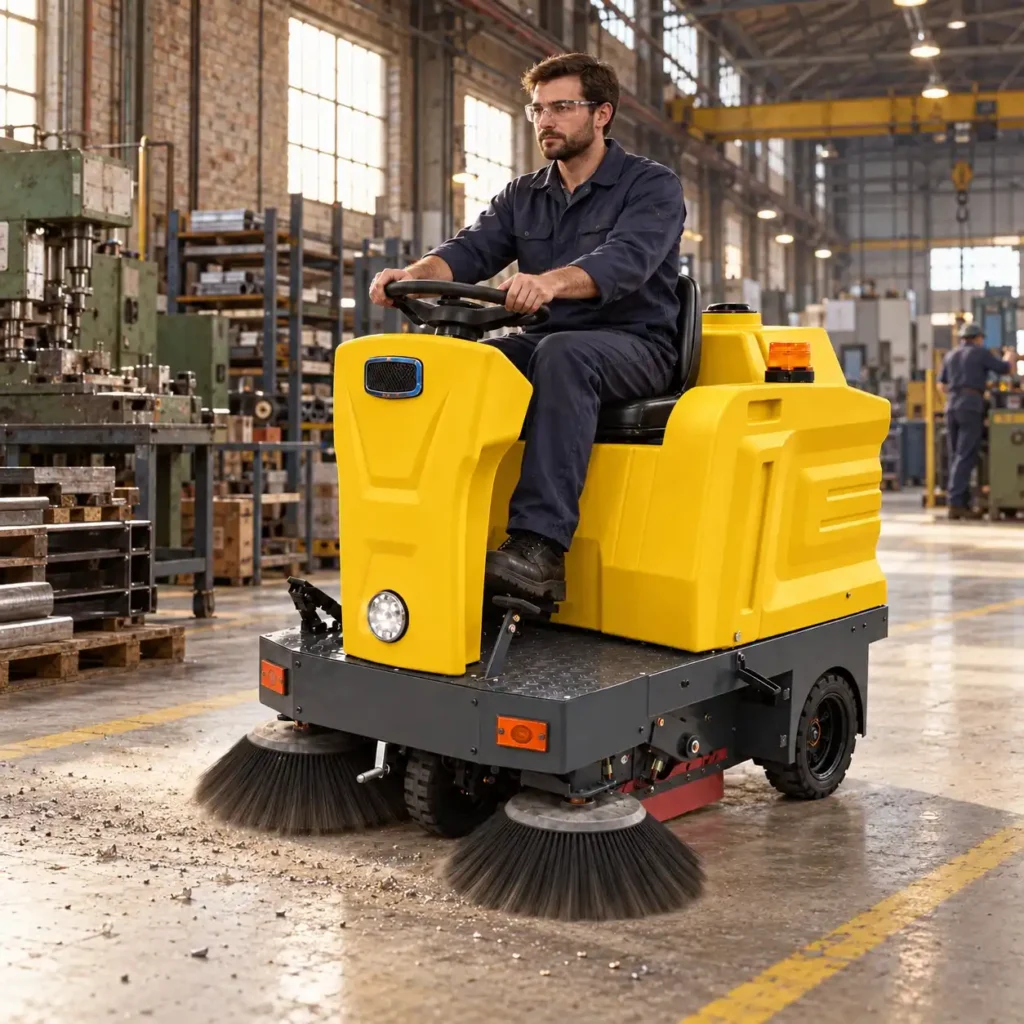
2.3 Ride-On Floor Sweepers
Best for: large facilities (> 8,000 m²), warehouses, parking lots, streets, airports, logistics hubs.
A ride on floor sweeper (also called a riding sweeper, sit-on sweeper or industrial rider) lets the operator drive. Coverage widths from 1,200 mm to over 2,000 mm, clearing up to 15,000 m²/h.
Typical specs (mid-size battery rider):
- Coverage width: 1,400–1,800 mm
- Productivity: 8,000–12,000 m²/h
- Hopper capacity: 180–400 L
- Battery: 48V, 200–400 Ah
- Runtime: 6–8 hours
- Price new: $8,000–$25,000 (large diesel riders: $25,000–$60,000)
Pros: fastest option, operator fatigue is minimal, handles heavy debris and outdoor terrain, can attach a gutter brush for curbs, one machine replaces 3–4 walk-behinds. Cons: $8,000–$40,000 new, needs storage space, not for narrow aisles (< 1.5 m), operator needs basic training.
Indoor pick: industrial ride on floor sweeper with battery power and non-marking tyres. Outdoor / parking lot pick: diesel or LPG ride on parking lot sweeper with pneumatic tyres and gutter brush.

2.4 Robotic / Autonomous Floor Sweepers
Best for: open-plan warehouses, 24/7 operations, facilities that cannot afford dedicated cleaning labour.
A robot floor sweeper navigates itself using laser lidar, bump sensors and cameras, runs scheduled cleaning, recharges itself and even empties into a docking station on premium models. Brain Corp, Nilfisk, Tennant and SoftBank lead the commercial space.
Typical specs:
- Coverage width: 700–1,000 mm
- Productivity: 1,500–3,000 m²/h (slower than ride-on, but runs 24/7)
- Runtime: 4–6 hours per charge
- Price: $25,000–$60,000 purchase, or $1,000–$2,500/month RaaS (robot-as-a-service)
Pros: runs at night / between shifts, no labour cost, consistent cleaning quality, data logs for audits. Cons: high entry price, cannot handle clutter, pallets in the aisle, or wet spills, still needs human supervision, hopper emptying and brush replacement.
If you are comparing a robot floor cleaner against a traditional ride-on, the rule of thumb: robots win on labour cost per m² in large, open, predictable spaces; ride-on units win on flexibility, debris tolerance and upfront price.
3. How to Choose: The 7-Factor Checklist
Use this checklist in order. It will narrow 261 possible machines down to 2 or 3 shortlist.
Factor 1: Floor Area (Size of the Space)
| Area per shift | Recommended type |
|---|---|
| < 1,500 m² | Manual push sweeper |
| 1,500–8,000 m² | Walk-behind battery sweeper |
| 8,000–20,000 m² | Ride-on battery / LPG sweeper |
| > 20,000 m², open plan | Ride-on + optional robotic unit |
A common mistake: buying a walk-behind for a 15,000 m² warehouse. The operator will spend 6 hours a day walking and hate the machine in 3 months. Match size to area, and leave 20% headroom for future growth.
Factor 2: Floor Type
- Sealed concrete / epoxy: any sweeper works.
- Hardwood / hardwood gym floors: use a soft-bristle bare floor sweeper with adjustable brush pressure — stiff bristles will scratch the finish.
- Tile / terrazzo: medium bristle, vacuum-assisted units handle grout-line dust well.
- Outdoor asphalt / paving: heavy-duty units with large wheels and gutter brushes.
- Anti-static / ESD floors: specify conductive brushes and wheels.
Factor 3: Debris Type
This is the most underrated filter. Tell the vendor exactly what you sweep up — nails? sawdust? sand? food packaging? — and they will size the brush and filter correctly.
- Fine dust (concrete dust, powder): you need a unit with a vacuum and filter shaker — a plain brush sweeper will blow dust into the air. Look at industrial floor sweeper vacuum combos with a pulse filter.
- Nails, screws, metal shavings: consider a magnetic floor sweep attachment in addition to your main sweeper. The 22-inch magnetic floor sweeper with release is a classic warehouse tool; the central machinery 22 magnetic floor sweeper is the budget favourite.
- Gravel, leaves, glass: ride-on units with large hoppers and heavy-duty side brushes.
- Food scraps / packaging: commercial units with sealed hoppers to avoid pests.
- Wet leaves / slush: skip the sweeper — you need a scrubber-squeegee.
Factor 4: Power Source — Battery vs Electric vs Petrol vs Propane
| Power type | Best for | Watch out for |
|---|---|---|
| Battery (lithium or AGM) | Indoor, warehouses, retail, quiet zones | Cold rooms reduce runtime by 30%; plan 1 spare battery for 2-shift sites |
| Corded electric | Small walk-behinds, home use | Cable trip hazard, limited range |
| Petrol / LPG / propane | Outdoor, parking lots, winter sites | Fumes — never run indoors |
| Manual / motorless | Small areas, budget | Labour cost, not for heavy debris |
Best battery-operated floor sweeper for most businesses is a 24V or 36V lithium walk-behind: zero emissions, 4–6 hours runtime, 1-hour fast charge top-up between shifts. Avoid cheap lead-acid packs — they die in 18 months under daily use.
Factor 5: Indoor vs Outdoor
Indoor: battery only (fumes = OSHA / EPA problem), white or non-marking tyres. Outdoor: petrol / diesel, pneumatic tyres, gutter brushes, weather-sealed electronics.
If you need both, most commercial walk-behinds are fine for covered yards — but check wheel type and IP rating before committing.
Factor 6: Budget — New vs Used
Price reference (2026, USD):
- Manual push: $150–$600
- Walk-behind battery: $2,500–$8,000
- Ride-on battery: $8,000–$25,000
- Ride-on diesel / large: $25,000–$60,000
- Robotic: $25,000–$60,000 (or $1,000–$2,500/month RaaS)
A used floor sweeper (1–5 years old) typically costs 40–60% of new. Weigh:
- Buy used if: cash flow is tight, you have an in-house technician, you are buying a proven platform (Clarke, Tennant, Nilfisk, Tomcat, Windsor, Advance).
- Buy new if: you want warranty, lithium battery (used units usually have tired lead-acid packs), and factory support.
Inspect any used unit: brush wear, hopper seals, battery voltage under load, tyres, and ask for service records.
Factor 7: Maintenance & Parts Availability
Before you buy, Google “[brand] floor sweeper parts” and check:
- Are roller brushes, side brushes, filters and batteries readily available in your country?
- What is the expected brush life? (typically 200–400 hours, depending on debris)
- Can your team do basic maintenance (brush change, filter shake, battery water top-up) or do you need a service contract?
- What is the warranty? (good units come with 1–2 years on the chassis, 6 months on brushes/batteries)
A cheap machine with no local parts support is a paperweight after 6 months.
4. Floor Sweeper by Industry: Quick Picks
- Warehouse / distribution centre: battery walk-behind for narrow aisles; ride-on for open storage floors. Add a magnetic sweeper for nails.
- Car garage / workshop: small walk-behind (500–650 mm width), oil-resistant brushes, steel filter.
- Parking lot / outdoor yard: ride-on diesel with gutter brush and leaf hopper.
- Gym / sports hall: soft-bristle walk-behind, non-marking tyres, low dB rating.
- Restaurant / food processing: stainless steel hopper, sealed vacuum, daily wash-down.
- Basketball court / large hall: wide walk-behind or small ride-on with soft brushes.
- Factory / production line: industrial walk-behind with metal-shaving deflectors.
- Retail / supermarket: quiet battery walk-behind, 55–65 dB, runs trading hours.
5. Common Buying Mistakes to Avoid
- Buying too small. A walk-behind for a 15,000 m² warehouse is a false economy.
- Ignoring the filter. Fine dust needs a vacuum + pulse filter; brush-only units create dust clouds.
- Cheap out on the battery. Lead-acid packs die in 18 months; lithium costs more upfront but lasts 5 years.
- No local parts support. A $4,000 machine with no local brushes is a $4,000 paperweight.
- Buying based on price alone. Total cost = machine + 5 years of brushes + batteries + service.
- Skipping the demo on your floor. Showroom floors are always clean. Insist on a trial on your concrete with your debris.
- Confusing sweeper and scrubber. If your floor is oily, a sweeper will spread the oil.
6. Floor Sweeper vs Floor Scrubber: Do You Need Both?
This confuses almost every buyer.
- A floor sweeper removes dry debris: dust, chips, gravel, paper.
- A floor scrubber washes and squeegees away wet dirt: oil, slurry, spills.
If your floor is mainly dusty, you only need a sweeper. If it is greasy and stained, you only need a scrubber. If it is both (most warehouses), you have two options:
- Buy two separate machines — usually cheaper and easier to maintain.
- Buy a floor sweeper scrubber combo (sweeps and scrubs in one pass) — saves time but costs more and each side compromises.
Rule of thumb: if your team sweeps more than 4× per week, keep them separate.
7. Top Floor Sweeper Brands to Shortlist
Brands worth comparing in 2026:
- Clarke (BSW 28, Viper) — strong value walk-behinds.
- Tennant / Nilfisk / Advance — premium industrial, robust, global service network.
- Windsor / Karcher — commercial mid-range.
- Tomcat / Factory Cat — heavy-duty US-built ride-ons.
- Green Machine — outdoor ride-on sweepers.
- Private-label Chinese OEMs (like SutoClean) — 30–50% lower price, same core components (battery, brush motor), best for export buyers who can service locally.
We publish brand-by-brand comparisons (including Clarke BSW 28 alternatives and Windsor / Tomcat / Advance head-to-head) in the Machine Comparison section.
8. FAQ: Floor Sweeper Buying Questions
Q: How much does a floor sweeper cost? A: Manual push units are $150–$600. Commercial walk-behind battery units are $2,500–$8,000. Ride-on industrial sweepers are $8,000–$25,000 (large diesel riders up to $60,000). Robotic floor cleaners start at $25,000.
Q: What is the difference between a floor sweeper and a floor scrubber? A: A sweeper removes dry debris (dust, chips, gravel) with brushes. A scrubber washes and squeegees wet dirt with water and detergent. You can buy separate units or a combo machine.
Q: Should I buy battery or petrol? A: Indoor = battery (zero fumes, quiet). Outdoor / winter / heavy outdoor debris = petrol or LPG. For 2-shift indoor operation, buy one spare battery.
Q: How often do I need to replace brushes? A: Side brushes last 200–400 hours; the main roller brush 300–500 hours. It depends on how abrasive your debris is (sand = fast wear, paper = slow).
Q: Is a robotic floor sweeper worth it? A: Only if you have a large open space (> 8,000 m²) and labour costs are high. The robot runs nights and weekends, so it maximises utilisation. For smaller sites, a walk-behind is better value.
Q: Can I use a floor sweeper on hardwood? A: Yes, but only with soft bristles and reduced brush pressure. Stiff bristles will scratch and swirl the finish.
Q: What size floor sweeper do I need for a warehouse? A: Under 8,000 m² → walk-behind. Over 8,000 m² → ride-on. Over 20,000 m² and open plan → ride-on plus a robotic unit for night cleaning.
Q: Are used floor sweepers a good buy? A: Yes, if you inspect the battery, brushes and hopper seals, and you have local parts support. Expect 40–60% off new price for a 1–5 year old machine.
9. Final Buying Checklist (Print This Before You Buy)
- Measure your floor in m² and pick the type from Factor 1.
- List the top 3 debris types and confirm your shortlisted machine handles them.
- Choose power source based on indoor/outdoor and shift pattern.
- Get 3 quotes: new, used, and (if area > 10,000 m²) robotic RaaS.
- Verify parts availability in your country.
- Ask for a demo or trial on your floor with your debris — not the vendor’s showroom floor.
- Calculate 5-year total cost: machine + brushes + batteries + service.
Ready to Shortlist a Machine?
Tell us your floor size, debris type and indoor/outdoor use, and our engineers will recommend 2–3 specific models with pricing — usually within 24 hours.
[Request a Free Quote] | [Download Our Floor Sweeper Catalog (PDF)]
Related guides:
- Best Walk-Behind Floor Sweepers for Warehouses
- Best Ride-On Floor Sweepers for Large Facilities
- Battery vs Propane Floor Sweeper: Which to Choose
- Used Floor Sweeper Buying Guide: 10 Things to Inspect
- Floor Sweeper vs Floor Scrubber: Key Differences