






Floor scrubber vs floor sweeper is a comparison that comes up constantly for facility managers, business owners, and even homeowners who maintain large hard-floor spaces. At first glance, both machines look similar: they roll across the floor, have handles or seats, and are designed to make cleaning faster than using a mop and broom. However, their core functions, cleaning mechanisms, and ideal use cases differ significantly. Choosing the wrong one can lead to wasted money, longer cleaning times, or floors that still look dirty after every pass. This guide breaks down how each machine works, what types of debris and stains they handle, and how to decide which one belongs in your cleaning arsenal.

Understanding the Core Function of a Floor Sweeper
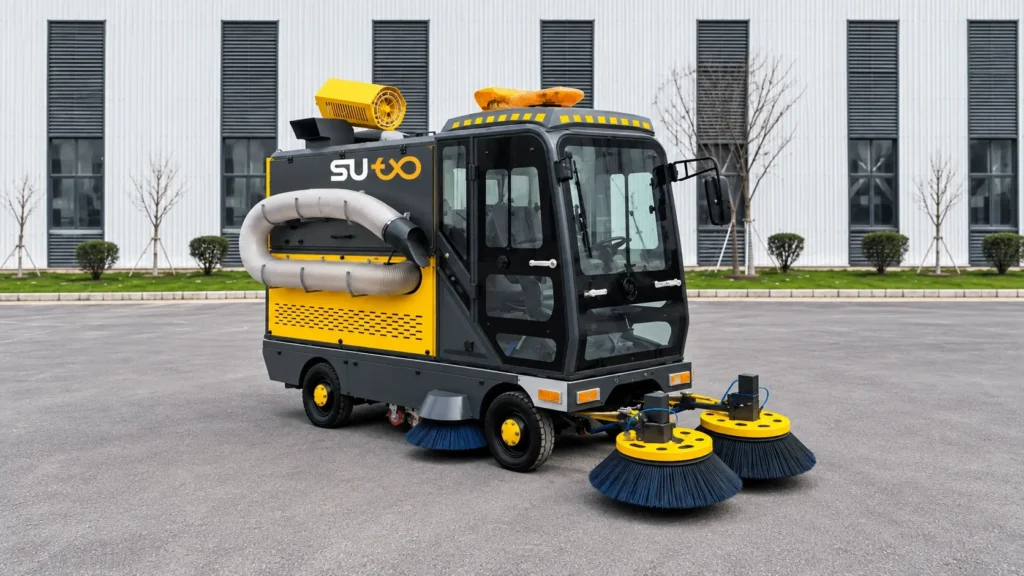
A floor sweeper is essentially a mechanized broom. Its primary job is to remove dry, loose debris such as dust, dirt, sand, paper scraps, leaves, and small gravel from hard surfaces. Most floor sweepers use a cylindrical rotating brush or a set of side brushes that sweep debris into a collection hopper or dustpan located at the rear or center of the machine. Some models include a vacuum-assisted system that pulls fine dust particles into a filter bag, which helps reduce airborne dust during operation.
Floor sweepers come in several forms. Push sweepers are manually operated and are ideal for small retail spaces, workshops, or sidewalks. Walk-behind powered sweepers use battery or fuel power to drive the brushes and sometimes the wheels, making them suitable for warehouses, parking lots, and large facilities. Ride-on sweepers are the largest option and can clean thousands of square feet per hour in distribution centers, stadiums, and outdoor venues.
The key limitation of a sweeper is that it does not wash or scrub the floor. It cannot remove sticky spills, grease, tire marks, food stains, or any substance that requires moisture and agitation to break down. If your floor has oily residue or dried-on liquids, a sweeper will simply roll over the stain without addressing it.
How a Floor Scrubber Works and What It Removes
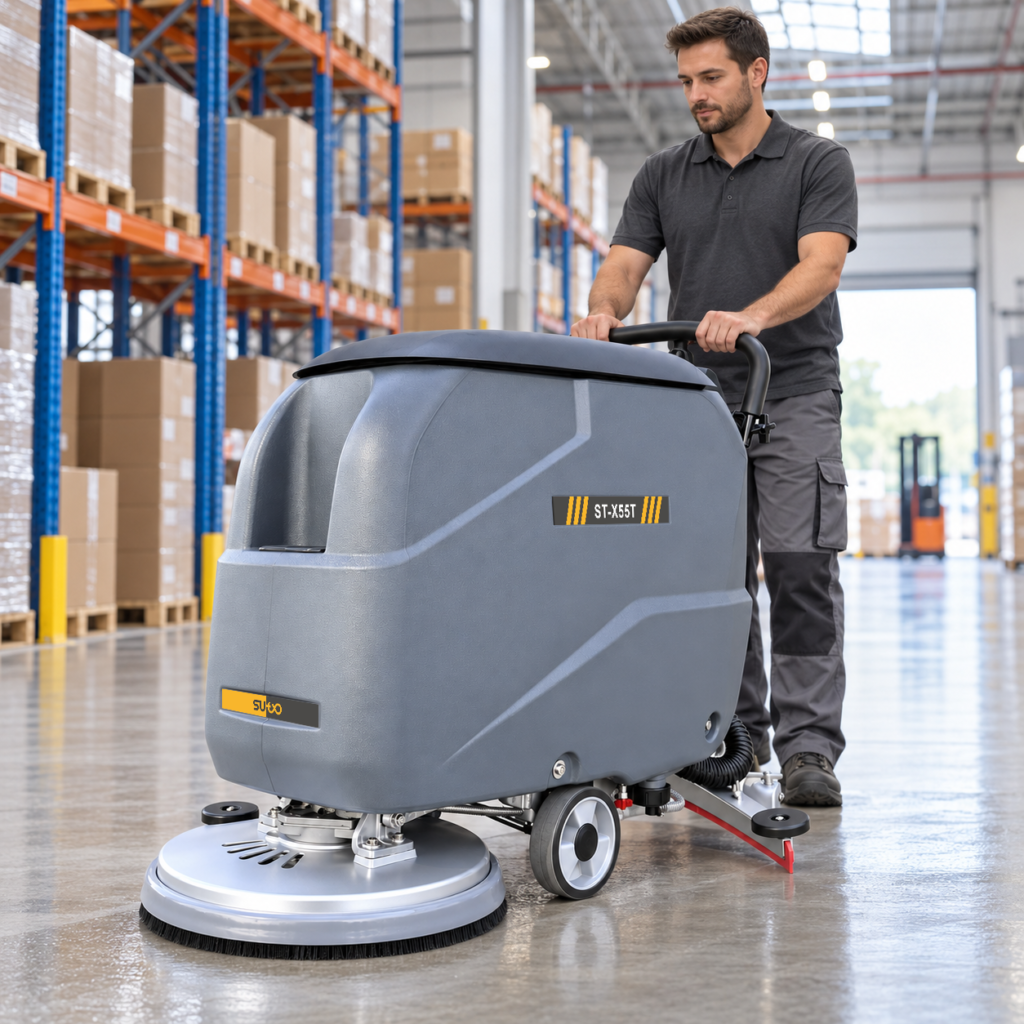
A floor scrubber is a cleaning machine that uses water, cleaning solution, and abrasive brushes or pads to scrub stuck-on dirt and grime from hard floors. In most models, clean water and detergent are dispensed onto the floor in front of the machine. Rotating brushes or cylindrical scrub decks agitate the solution against the surface, loosening dirt. A squeegee system at the rear of the machine then vacuums the dirty water back into a recovery tank, leaving the floor damp and significantly cleaner.
Floor scrubbers are available in walk-behind and ride-on configurations. Compact walk-behind scrubbers work well in grocery stores, schools, hospitals, and restaurant kitchens. Larger ride-on scrubbers handle massive areas like airports, convention centers, and manufacturing plants. Some scrubbers are designed for specific floor types, including tile, concrete, epoxy, vinyl, terrazzo, and sealed wood.
Unlike a sweeper, a floor scrubber can remove sticky residue, food spills, oil stains, and built-up grime. It sanitizes the surface when used with appropriate cleaning chemicals and leaves a polished, slip-resistant finish. The main trade-off is that a scrubber is not effective on large amounts of loose debris. Small rocks, metal shavings, or thick piles of sawdust can clog the squeegee, damage brushes, or leave streaks as debris gets dragged across the floor.
Floor Scrubber vs Floor Sweeper: Key Differences in Debris Handling
The most important distinction in the floor scrubber vs floor sweeper debate comes down to the type of debris each machine handles. Sweepers excel at dry, loose material. Scrubbers excel at wet, sticky, or ground-in material. This difference drives almost every other decision factor, including maintenance costs, water usage, and cleaning frequency.
Another key difference is the post-cleaning state of the floor. After using a sweeper, the floor is dry and immediately ready for foot traffic or forklift traffic. After using a scrubber, the floor is damp and may require a few minutes to dry completely. In high-traffic areas, this drying time can be a safety concern. Many facilities place wet floor signs and route traffic around freshly scrubbed areas until the surface dries.
Chemical usage also separates the two machines. A sweeper requires no water, no detergent, and no recovery tank emptying. A scrubber requires clean water filling, detergent dosing, and dirty water disposal after every use. The ongoing cost of cleaning chemicals and the time spent managing water tanks can add up, especially in facilities that scrub daily.
When to Choose a Floor Sweeper
A floor sweeper is the right choice when the majority of your debris is dry and loose. Warehouses that accumulate wood splinters, packing peanuts, dust, and cardboard fragments benefit from daily sweeping. Auto shops with metal shavings, sand, and dried leaves near bay doors need a sweeper to prevent that abrasive debris from scratching floors or damaging scrubber components. Outdoor sidewalks, loading docks, and parking garages collect grit and gravel that sweepers handle quickly and efficiently.
Sweepers also make sense when you need to cover a large area quickly without stopping to refill water or empty recovery tanks. Many ride-on sweepers can clean 100,000 square feet or more on a single charge. The absence of water means no freeze risk in cold storage areas or outdoor winter environments.
Cost is another factor. Entry-level push sweepers are significantly less expensive than floor scrubbers. Even commercial walk-behind sweepers tend to cost less than comparable scrubbers because they have fewer components. There is no water pump, solution tank, recovery tank, squeegee assembly, or vacuum motor to maintain.
When to Choose a Floor Scrubber
A floor scrubber is the right choice when your floor needs more than surface-level debris removal. Food processing plants, commercial kitchens, and restaurants deal with grease, oil, sauces, and sticky spills daily. A sweeper cannot remove these substances, and a mop and bucket simply spread the grease around. A scrubber applies detergent, agitates the surface, and extracts the dirty solution, leaving a genuinely clean floor.
Healthcare facilities, schools, and retail stores choose scrubbers for sanitation and appearance. Scrubbers remove scuff marks and restore the uniform sheen of tile and sealed concrete. They can also apply disinfectants more evenly than manual mopping. In facilities where slip-and-fall prevention is critical, a scrubber’s squeegee system removes excess water and detergent residue that can make floors dangerously slick.
Facilities with heavy foot traffic and minimal loose debris are perfect candidates for scrubbers. Grocery store aisles, hospital corridors, and airport terminals see constant foot traffic that grinds dirt into the floor. These spaces rarely have large piles of loose debris, so a scrubber can go straight to work without a pre-sweep step.
Combining Both Machines for Optimal Results
Many large facilities find that the floor scrubber vs floor sweeper question does not have a single answer. In warehouses with both loose debris and oily stains, using a sweeper first and a scrubber second produces the best result. The sweeper removes rocks, bolts, and dust that could scratch the floor or damage the scrubber’s squeegee. The scrubber then tackles grease, tire marks, and staining that the sweeper left behind.
Some manufacturers offer combination machines that include both sweeping and scrubbing functions. These units have a sweeping brush that captures loose debris before the scrub deck applies water and cleaning solution. Combination machines are convenient but often cost more upfront and require more maintenance than dedicated machines. For facilities with moderate debris and staining, a combo unit can eliminate the need for two separate machines.
Evaluating Floor Type and Surface Compatibility
Not every floor type is suitable for both machines. Sweepers are generally safe on almost any hard surface, including concrete, asphalt, tile, and sealed wood. Because they do not introduce moisture, there is little risk of water damage or warping. However, sweepers with stiff main brushes can scratch soft surfaces like polished marble or delicate vinyl if the brush pressure is set too high.
Floor scrubbers require more careful surface evaluation. Porous concrete absorbs water and may require sealing before scrubber use to prevent staining or damage. Unglazed tile and grout lines can trap dirty water, leaving dark stains if the squeegee does not recover all the solution. Wood floors must be properly sealed and should never be scrubbed with excessive water. Always consult the scrubber manufacturer’s guidelines for pad and brush selection based on your specific floor material.
Brush and pad selection also varies between applications. Sweeper brushes range from soft polypropylene for fine dust to stiff steel wire for heavy debris. Scrubber pads range from gentle white polishing pads to aggressive black stripping pads. Choosing the wrong pad or brush can damage the floor or fail to clean effectively.
Maintenance and Operating Costs Compared
Maintenance requirements differ substantially between the two machines. Floor sweepers have fewer consumable parts. The main brush, side brushes, and dust filters require periodic replacement, but those are relatively inexpensive. There is no water system to clean, no recovery tank to empty, and no squeegee blades to inspect for wear.
Floor scrubbers require more diligent daily maintenance. After every use, operators should drain and rinse both the solution tank and recovery tank to prevent odors, bacteria growth, and chemical buildup. Squeegee blades wear out and must be replaced regularly to maintain water recovery performance. Brushes and pads are consumable items that wear down based on floor type, pad pressure, and cleaning frequency. Vacuum motors and water pumps add additional failure points that sweepers do not have.
Battery life is another consideration. Both machines are commonly battery-powered, but scrubbers consume more energy because they run brush motors, vacuum motors, water pumps, and drive motors simultaneously. A scrubber may clean fewer square feet per charge than a similarly sized sweeper. Facilities with long cleaning shifts may need spare batteries or opportunity charging.
Making the Final Decision
Ultimately, the choice between a floor scrubber and a floor sweeper comes down to your primary cleaning goal. If you are removing dry debris from large areas quickly and want minimal maintenance, choose a floor sweeper. If you need to remove stains, grease, and sticky residue while improving sanitation and floor appearance, choose a floor scrubber. Facilities that face both types of soiling should consider using both machines in sequence or investing in a combination unit.
Before making a purchase, evaluate your floor type, the volume and type of debris, daily cleaning time, and available budget for ongoing supplies. Talk to equipment suppliers about a demo on your actual floor surface, and ask about brush or pad recommendations for your specific conditions. The right machine will pay for itself through labor savings, improved safety, and a noticeably cleaner facility.