






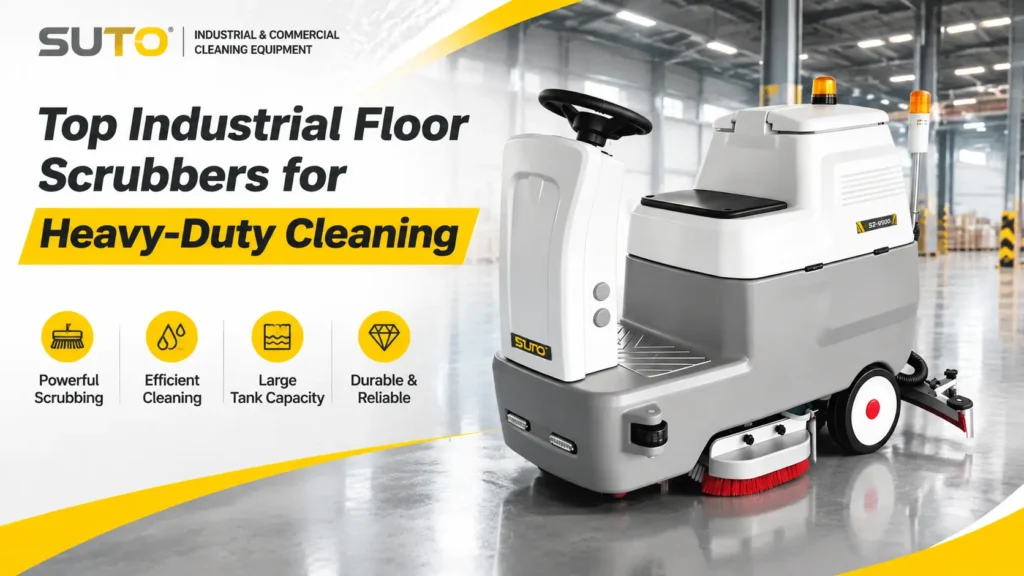
A floor scrubber for epoxy floors should remove everyday soil without dulling or damaging the coating. The right choice depends on the epoxy system, surface texture, condition of the finish, type of soil and the cleaning routine. A machine that works well on rough concrete is not automatically the best choice for a smooth or decorative resin floor.
Quick answer: confirm that the coating is fully cured and approved for machine scrubbing, select a compatible brush or pad and low-foam cleaning solution, and test the complete setup in a small inconspicuous area before cleaning the full floor.

Why epoxy floors need a considered scrubber setup
Epoxy is used in warehouses, workshops, production areas, showrooms and other facilities because it creates a hard, sealed surface. However, epoxy floors are not all identical. Some are smooth and glossy; others have anti-slip aggregate, texture, decorative flakes or worn sections. Those differences affect how a scrubber should be configured.
Fine grit can become trapped under a brush or pad and act like an abrasive. An overly aggressive pad, unsuitable chemical or excessive solution can also affect the appearance of some coatings. Always follow the flooring contractor’s care instructions and the cleaning-chemical label.
How to choose a floor scrubber for epoxy floors
1. Identify the coating and surface texture
Before comparing machines, find out whether the floor is a smooth epoxy coating, a textured anti-slip system, a flake finish or another resin-based system. Check whether the coating is fully cured and whether there are damaged, peeling or exposed areas. Ask the floor supplier which cleaning methods and chemicals are permitted.
2. Match the brush or pad to the finish
Brush and pad selection is as important as the machine itself. Start with the least aggressive option that can remove the actual soil, and confirm compatibility with the coating manufacturer. Do not assume that a pad described as suitable for concrete is also suitable for every epoxy finish. Keep separate tools for different floor zones if grit or metal particles could be transferred.
3. Check solution delivery and recovery
A scrubber should apply cleaning solution evenly and recover the dirty liquid effectively. Review the solution-flow adjustment, squeegee design, vacuum recovery and access for cleaning the recovery tank. Excess solution can leave residue or create a slip risk, while poor recovery can leave visible trails on a glossy floor.
4. Size the machine for the facility
Measure the total cleanable area, narrowest aisle, doorway width, turning space and any ramps. A walk-behind machine can be easier to position around benches and equipment. A ride-on scrubber may be worth evaluating for larger open production or warehouse floors, provided its dimensions and turning path fit the site.
5. Consider the full maintenance routine
Check how easily operators can remove and rinse brushes or pads, clean the squeegee blades, empty the recovery tank and inspect filters. A machine that is difficult to clean after use may allow grit and residue to build up and transfer to the next cleaning shift.
A safe operating routine for epoxy floors
- Inspect the floor. Check the coating condition, joints, loose material and any areas where the finish is lifting or damaged.
- Remove loose grit first. Sweep or vacuum sand, metal particles and other abrasive debris before wet scrubbing.
- Prepare the approved solution. Use a low-foam product only when it is approved for the floor system and the machine. Follow the stated dilution instructions.
- Fit the approved brush or pad. Confirm that it is clean and free of embedded grit. Set the machine according to its manual.
- Test a small area. Check the cleaned and dried test area for scratching, gloss change, residue or unexpected colour change before continuing.
- Clean in controlled passes. Avoid unnecessary dwell time, excessive solution and abrupt turns with the brush or pad in contact with the floor.
- Inspect the result and clean the machine. Check for remaining trails, rinse the recovery tank and clean the squeegee and tools after the task.
What type of machine should you consider?
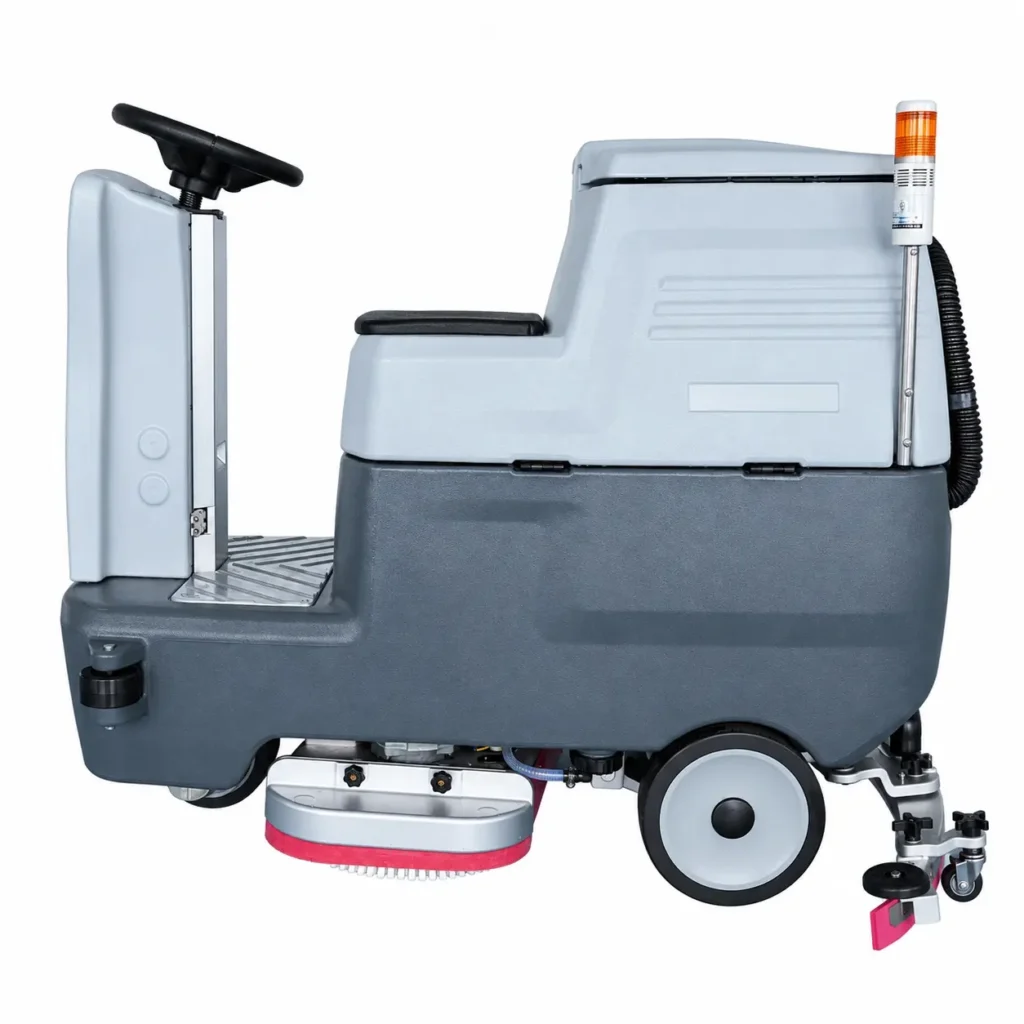
For compact rooms or areas with frequent obstacles, a walk-behind scrubber may provide better control. For larger open floors, compare ride-on machines by their cleaning path, tank arrangement, manoeuvrability and the operator’s ability to reach all required zones. The nominal cleaning width alone does not show how efficiently a machine will work around columns, racks and production equipment.
Il SUTO X110N industrial floor scrubber dryer is listed for routine cleaning of sealed hard floors, including epoxy-sealed floors, when the correct brush and cleaning solution are used. Confirm the exact brush or pad configuration and chemical compatibility for your coating before ordering.
For a broader comparison of machine types and floor conditions, see our floor scrubber selection guide for concrete floors. For ongoing care after each shift, read the industrial floor scrubber maintenance guide.
Common mistakes to avoid
- Using a highly abrasive brush or pad without checking the coating supplier’s recommendations.
- Scrubbing loose grit into the finish instead of removing it first.
- Using a detergent that leaves residue or is not approved for the floor system.
- Assuming every epoxy floor has the same texture, chemical resistance or cleaning requirements.
- Skipping a test area when changing a pad, brush, detergent or machine setting.
Frequently asked questions
Can you use an automatic floor scrubber on epoxy?
Often, yes, if the epoxy coating is fully cured and the machine, brush or pad and cleaning solution are approved for that particular floor. Check the coating manufacturer’s instructions and test the setup first.
Which brush is best for an epoxy floor?
There is no single brush that is right for every epoxy system. Choose the least aggressive compatible brush or pad that removes the soil, and confirm the choice with the floor supplier.
Can a ride-on floor scrubber clean an epoxy warehouse floor?
It can be considered for a large, open area if the floor system permits machine scrubbing and the machine fits the aisles, doorways and turning areas. Confirm operating weight and floor restrictions with the flooring contractor where required.
Why does a scrubber leave streaks on epoxy?
Possible causes include dirty or worn squeegee blades, debris on the floor, excess solution, detergent residue or an unsuitable cleaning setup. Inspect the recovery system and test the approved solution and pad combination.
Need help selecting a scrubber for your epoxy floor?
Send SUTO the floor type, approximate area, surface texture, cleaning frequency and a few photos of the site. Our team can help you compare suitable machine configurations and identify the brush, pad and solution details that should be confirmed before purchase.