




A parking garage floor sweeper can help remove loose sand, grit and litter before they accumulate in driving lanes. The best choice depends on much more than total floor area: columns, parked cars, ramps, ceiling height and the type of debris all affect the route and the machine.
What should a parking garage floor sweeper handle?
List the debris on each level. Fine dust calls for effective filtration and a practical filter-cleaning routine; leaves and larger litter require a suitable hopper and pickup system. Wet or oily deposits are a different task and may require a scrubber or a separate treatment.
Consider sweeping first and washing afterward where both loose debris and adhered soil are present. Our floor scrubber vs floor sweeper guide explains the distinction.
Measure the route before choosing a machine
Clearance and turning
Measure doorways, narrow lanes, low pipes and the turning space between columns. Include the full machine width, including side brushes. A narrower machine may clean more of a complex layout despite a smaller nominal path.
Ramps and slopes
Measure the steepest operating and transport slopes. Ask the supplier for the model’s permitted slope, load conditions and braking requirements; do not assume that an indoor sweeper is suitable for every ramp. Keep pedestrians and vehicles separate during operation.
Dust control
Review the filtration system, access to the filter, emptying method and maintenance needs. Test the equipment on the actual dust if possible. Water-based dust suppression may not be appropriate for every indoor surface or drain arrangement.
Walk-behind or ride-on?
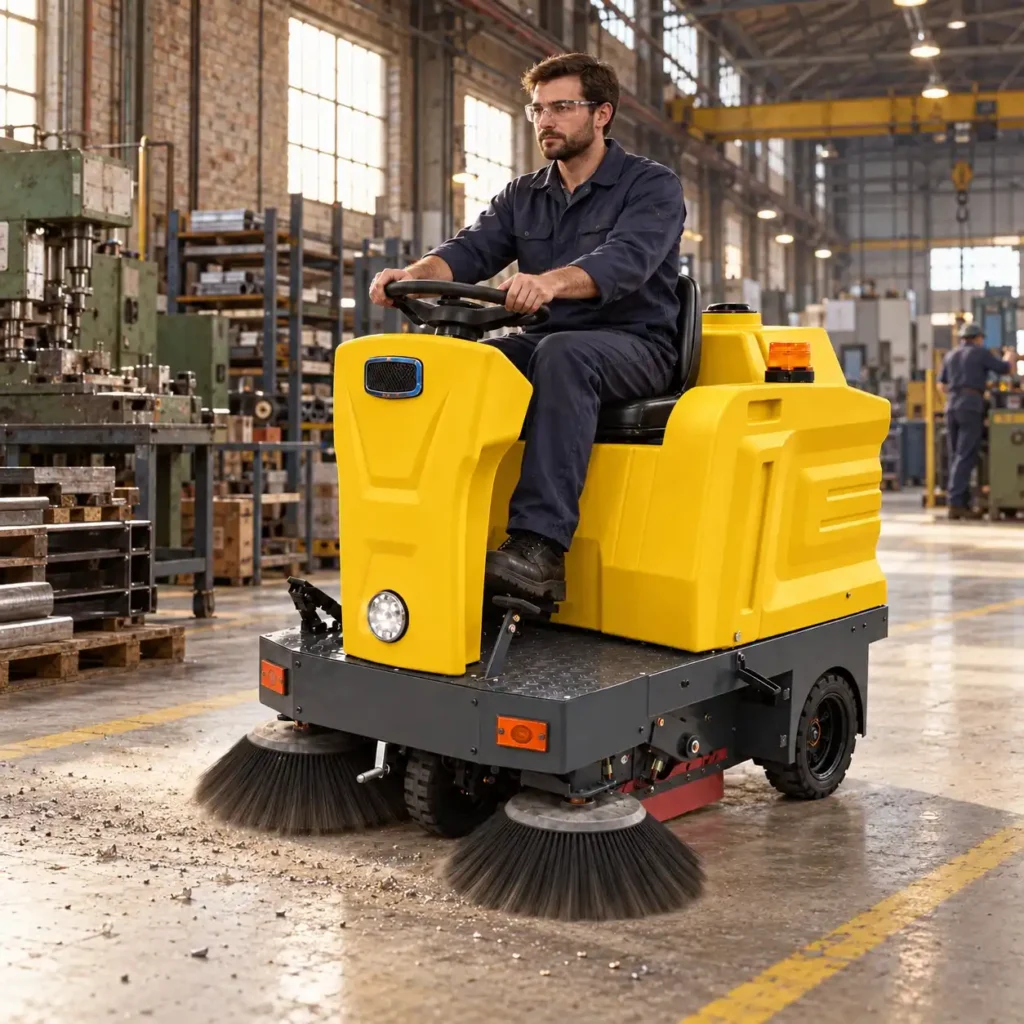
A walk-behind sweeper is worth considering for compact or obstructed areas. A ride-on machine may suit larger open decks, provided it fits the route and the operator can safely navigate ramps and pedestrians. Compare actual cleaning time, including turns, hopper emptying and detail work.
Plan a practical cleaning routine
- Inspect the route for vehicles, people, spills and large objects.
- Sweep open lanes and parking bays according to the site’s traffic plan.
- Clean edges and spaces the machine cannot safely reach separately.
- Empty the hopper and inspect brushes and filters according to the manual.
- Check whether remaining stains need a separate wet-cleaning process.
For more general selection factors, read the Guida all'acquisto di spazzatrici per pavimenti. Kärcher also discusses cleaning access routes and parking areas in its parking garage cleaning guide.
Consider a SUTO ride-on sweeper
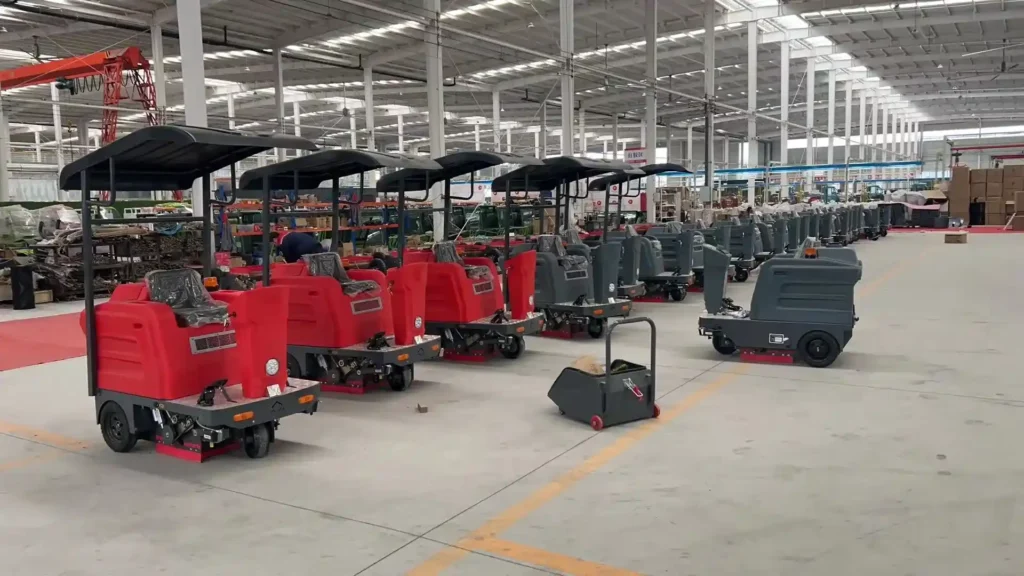
SUTO offers ride-on floor sweepers for commercial cleaning. Before recommending a model, the team needs the garage’s narrowest clearance, ramp gradient, debris type and cleaning schedule. Confirm the model’s dimensions and operating limits against these measurements.
Frequently asked questions
Can a sweeper remove oil stains?
A sweeper collects loose debris; adhered oil stains usually need a separate cleaning method compatible with the floor coating.
Can I use a ride-on sweeper on ramps?
Only if the particular machine’s documented slope and operating conditions allow it. Check the manufacturer’s manual before use.
How often should a parking garage be swept?
Set the schedule around traffic, debris build-up and local conditions. Inspect the results and adjust the frequency rather than relying on a fixed universal interval.
Need help choosing a parking garage floor sweeper?
Share your layout, route widths, ramp measurements and photos with SUTO for a model recommendation suited to the site.