





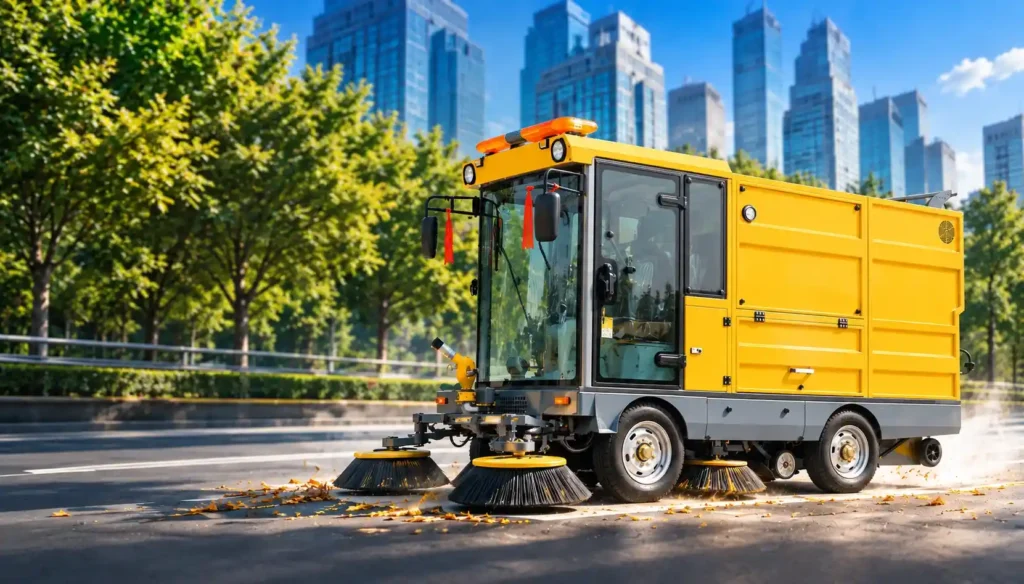
A ride-on floor sweeper for factories can help maintenance teams collect loose dust and debris across production areas, workshops and internal traffic routes. The right machine is not simply the one with the widest sweeping path. It must fit the site’s aisles, floor condition, debris type, dust-control needs and waste-disposal routine.
Quick answer: map the cleaning route first, identify the debris to be collected, then compare machine width, turning space, brush arrangement, hopper access, filtration and service requirements. Check the machine on the actual floor and debris whenever a site trial is possible.
What should a factory floor sweeper clean?
Factory floors can collect packaging scraps, paper, dust, sand, leaves brought in from outside and process-related loose material. Different production areas may generate different debris, so list the material found on each route before selecting a sweeper.
A floor sweeper is intended mainly for loose debris. Sticky residues, liquid spills, grease films and adhered stains may require a separate cleaning method or a floor scrubber. Do not use a sweeper as a substitute for spill-control procedures or a machine designed for wet cleaning.
How to choose a ride-on floor sweeper for factories
1. Measure the route, not just the floor area
Record the narrowest aisle, doorway, turning space, loading-bay approach and any low-clearance points. Include the full machine width with side brushes deployed. A larger machine may cover an open production hall efficiently but struggle around work cells, stored materials and parked equipment.
2. Match the sweeping system to the debris
Check whether the machine’s main brush and side brushes are designed for the material on your floor. Fine dust, coarse grit, paper scraps and larger pieces behave differently. Ask the supplier how the machine handles each material and whether any debris should be collected separately before sweeping.
3. Review dust control and filtration
Dust control is especially important where fine particles are generated or where people work nearby. Review the filter type, filter-cleaning method, dust-sealing points and any water-spray dust-suppression system. Confirm that the selected setup is appropriate for the material being collected and the factory’s indoor air and housekeeping requirements.
4. Check hopper capacity and emptying access
Estimate how much debris accumulates on each route and how often the hopper will need to be emptied. Check the hopper’s usable capacity, access height, unloading method and the location of the waste container. A larger hopper is not useful if the operator cannot empty it safely and conveniently.
5. Compare power, operating time and charging arrangements
For an electric sweeper, confirm the battery type and capacity offered with the exact model, charging time, charging location and expected duty cycle. Match the operating plan to the factory’s cleaning windows and shift pattern. Do not rely on a general runtime estimate without checking the selected configuration and actual site conditions.
6. Plan operator safety and routine service
Consider visibility, warning devices, braking, pedestrian crossings, vehicle routes and the operator’s view when reversing. Ask for the operating manual and maintenance schedule. Confirm how operators inspect brushes, filters, tyres and collection components before and after each shift.
Walk-behind or ride-on sweeper?
A walk-behind sweeper may be more practical for small rooms, narrow aisles and areas with frequent obstructions. A ride-on sweeper is worth considering when the facility has longer routes and enough turning space for the machine. Some factories use different equipment for open halls and confined production zones rather than expecting one machine to clean every location.
Plan a factory sweeping route
- Divide the site into zones such as production halls, warehouse aisles, loading areas and entrances.
- Identify pedestrian routes, forklift lanes, restricted areas and temporary storage points.
- Remove large obstructions and deal with liquid spills using the site’s approved procedure.
- Sweep from the far end of each zone toward the designated collection point, where the site layout allows.
- Empty the hopper at the planned location and avoid overfilling it.
- Inspect brushes and filters, remove accumulated debris and record any service issues.
For more general selection factors, use the SUTO floor sweeper buying guide. If airborne dust is a key concern, our article on sweeper dust control and spray systems explains points to review when comparing dust-control arrangements.
Example: a compact SUTO ride-on sweeper
الـ SUTO BR 110/65 C industrial ride-on floor sweeper is one option to review for suitable factory and workshop routes. Its product information lists an 1100 mm sweeping width, a 65 L waste hopper and a 48 V electric power system. The listed theoretical productivity should not be treated as a guaranteed site result: actual coverage depends on aisle layout, obstacles, debris, operator technique and hopper-emptying time.
Before choosing this or another model, send the supplier the narrowest route width, floor surface, debris examples, required cleaning window and photos of the facility. Confirm the exact machine configuration and operating limits against the site.
Common factory sweeper selection mistakes
- Choosing by advertised sweeping width without measuring aisles and turning areas.
- Ignoring fine-dust filtration and the method for cleaning the filter.
- Assuming a sweeper can remove oil, liquid spills or adhered production residue.
- Overlooking hopper-emptying access and the distance to the waste-disposal point.
- Buying an electric model before checking charging facilities and the required operating schedule.
الأسئلة الشائعة
Is a ride-on floor sweeper suitable for a factory?
It can be suitable for open factory floors, workshops and internal traffic routes where the machine fits the layout and the debris is appropriate for sweeping. Tight or obstructed areas may need a smaller machine or manual detail cleaning.
Can a factory floor sweeper collect fine dust?
That depends on the machine’s filtration and dust-control design, the type of dust and the site’s requirements. Review the filter specification and cleaning method with the supplier before use.
Can a floor sweeper pick up oil or liquid spills?
Most floor sweepers are intended for loose debris rather than liquid recovery or sticky oil residues. Follow the factory’s spill procedure and use equipment designed for the specific material.
How do I estimate the right sweeper size?
Measure the cleanable route, narrowest aisle, turning space and obstacles. Then compare those measurements with the machine’s full dimensions, including side brushes, rather than relying only on the nominal sweeping width.
Looking for a factory floor sweeper?
Share your factory layout, floor surface, debris type, aisle measurements and cleaning schedule with SUTO. We can help you review suitable ride-on and walk-behind options and confirm the machine details needed for your application.
