





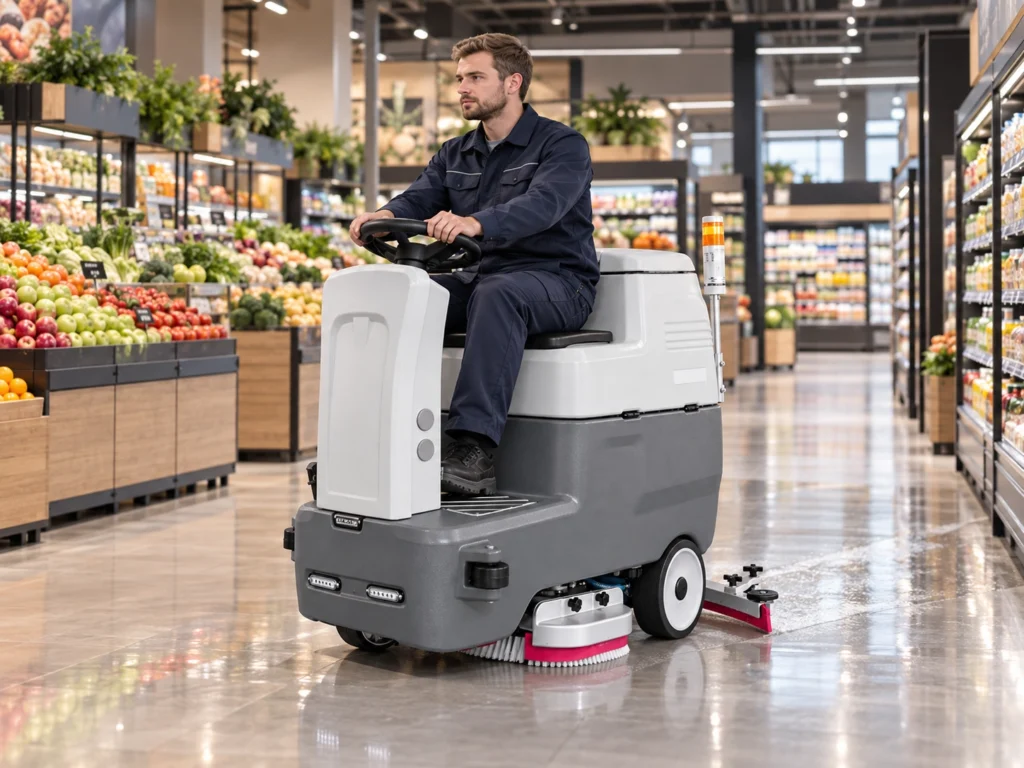
Understanding the Role of a Commercial Floor Scrubber
Maintaining clean floors in a commercial setting is not just about appearances. It impacts safety, equipment longevity, and the overall impression your business leaves on customers and employees. A commercial floor scrubber is a significant investment that can transform your maintenance routine from a labor-intensive chore into an efficient, automated process.
Unlike a mop and bucket, an industrial floor scrubber scrubs, washes, and dries the floor in a single pass. This not only saves time but also significantly reduces the risk of slip-and-fall accidents caused by wet floors. Whether you manage a retail space, a hospital, or a manufacturing plant, choosing the right machine is critical to maximizing your return on investment.
Key Factors to Consider Before Buying
Before you start browsing models, you need to assess your specific environment. Buying a machine that is too large is a waste of money, while a machine that is too small will lead to burnout and inefficient cleaning.
1. Evaluate Your Space and Layout
The physical dimensions of your facility will dictate the type of machine you need. You should measure the total square footage you intend to clean and note any obstacles, such as narrow aisles, tight corners, or low-hanging shelving.
- Small Spaces (Under 10,000 sq ft): A walk behind floor scrubber is usually sufficient. These machines are maneuverable and can easily navigate through tight retail aisles or restaurant kitchens.
- Large Spaces (Over 20,000 sq ft): For warehouses, convention centers, and large distribution hubs, a ride on floor scrubber is essential. These allow the operator to sit or stand while cleaning, drastically reducing fatigue and increasing hourly productivity.
2. Choose the Right Power Source
Commercial floor cleaning machines typically come in three power configurations: battery, corded electric, or propane. Your choice depends heavily on your facility’s layout and ventilation.
Battery-powered models are the most popular for an automatic floor scrubber because they offer unrestricted movement without tripping hazards. However, they require charging time and battery maintenance.
Corded electric models are usually cheaper and offer unlimited runtime, but they are generally reserved for smaller areas where the operator doesn’t have to move far from the outlet.
Propane units are powerful and can be refueled instantly, making them great for large outdoor or heavily soiled warehouses, but they cannot be used in areas with poor ventilation or near open flames.
3. Match the Brush Type to Your Floor
The scrubbing head is the heart of the industrial floor scrubber. Using the wrong brush can damage your floor or fail to clean it properly.
- Disk Scrubbing Heads: These are the standard choice for smooth floors and light to medium debris. The pads rotate in a circular motion, providing a consistent scrub.
- Cylindrical Scrubbing Heads: If your floor has grout lines, texture, or accumulated debris, a cylindrical brush is better. It sweeps larger debris into a collection tray while scrubbing, meaning you don’t have to sweep before you wash.
Walk-Behind vs. Ride-On: Making the Right Call
One of the most significant decisions in a floor scrubber buying guide is the configuration of the machine.
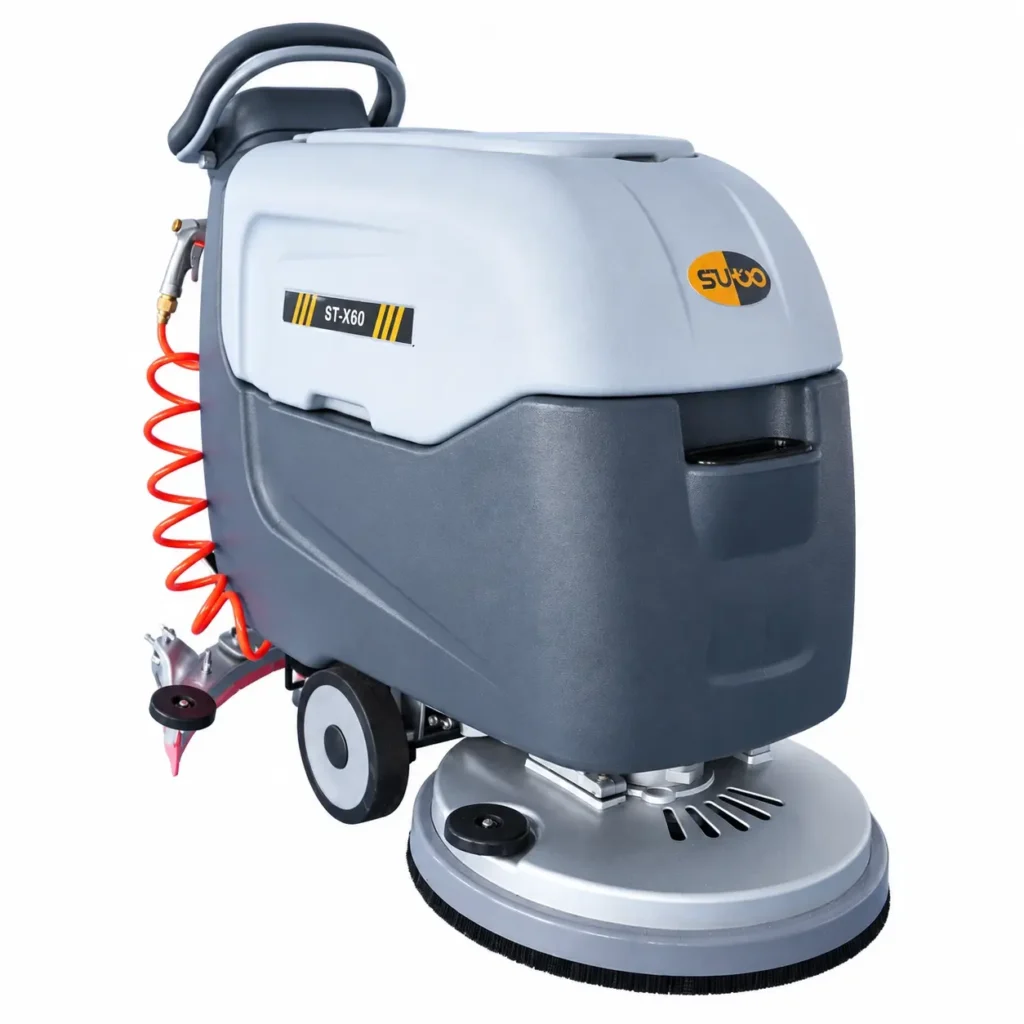
Walk Behind Floor Scrubber
This is the most versatile commercial floor cleaning machine available. It is perfect for facilities that have a mix of open areas and confined spaces. They generally have a lower upfront cost and require less storage space. If your cleaning crew needs to transition from a hallway to a bathroom or a small office, a walk-behind unit is usually the best commercial floor scrubber for the job.
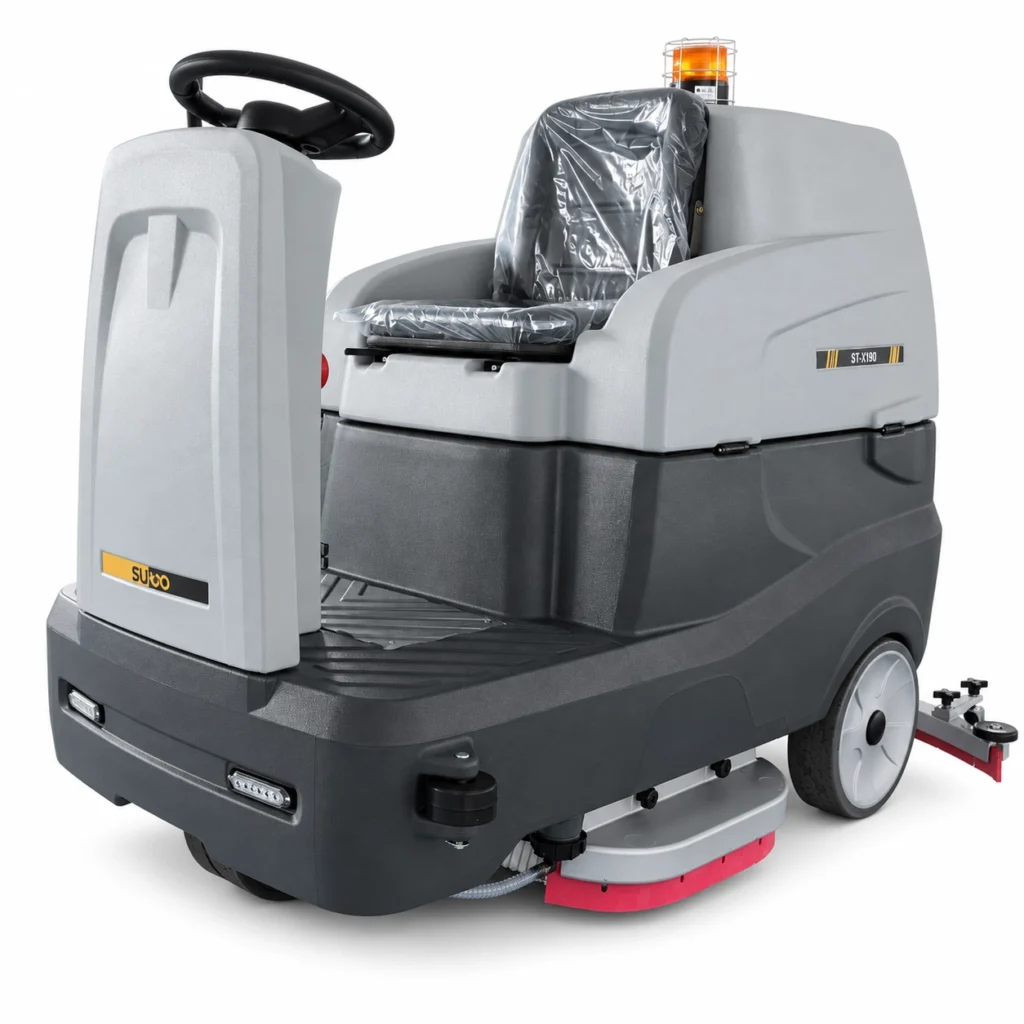
Ride On Floor Scrubber
When productivity is the top priority, a ride-on unit is unmatched. A floor scrubber for warehouse use often needs to cover hundreds of thousands of square feet in a single shift. A ride-on machine can clean up to three times faster than a walk-behind model. While the initial investment is higher, the labor savings over time often justify the cost.
Don’t Forget Maintenance and Support
A commercial floor scrubber is a mechanical asset. To keep it running for years, you need to ensure you have access to parts and service.
- Check the Warranty: Look for warranties that cover the tank, the frame, and the electrical components separately.
- Local Service: Check if there is a local dealer who can service your machine. Downtime on a commercial floor cleaning machine can lead to unsanitary conditions.
- Operator Training: Ensure the machine you choose is intuitive. Some machines feature simple “one-touch” controls, while others offer advanced telematics for fleet management.
Final Thoughts
Choosing the right equipment requires balancing your budget against your cleaning needs. By assessing the size of your space, understanding your floor surface, and choosing the correct power source, you can narrow down the options effectively. Whether you opt for a compact walk-behind or a robust ride-on, investing in a reliable automatic floor scrubber will enhance the professionalism and safety of your business environment.
